
Bell Rock Vortex: Where to Start Your Sedona Vortex Experience
If you're visiting Sedona vortexes for the first time, start at Bell Rock. It's the most accessible, the trail is easy, and the balanced energy makes it the perfect introduction to what these sites are about.
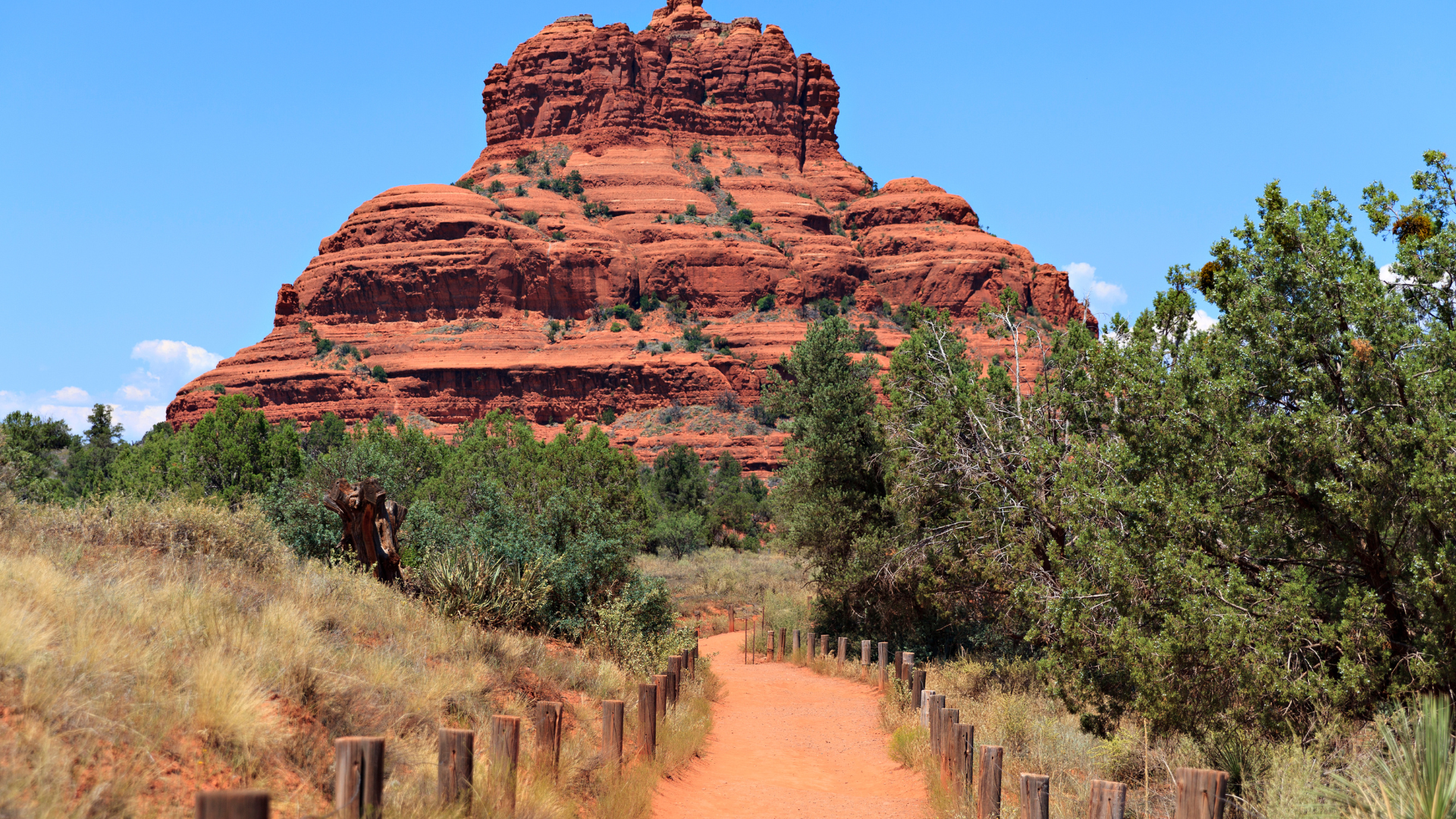
If someone asks me where to start with Sedona's vortexes, the answer is always Bell Rock.
It's visible from Highway 179 before you even get to Sedona proper. You can see it from the parking lot. The trail is flat and easy at the base, and the energy here is what practitioners call balanced — a combination of masculine and feminine, upflow and inflow. It doesn't overwhelm you. It grounds you.
This is the vortex equivalent of a handshake. If Sedona's energy is going to introduce itself to you, this is where it happens.
The Bell Rock Trail
The Bell Rock Pathway is one of the easiest and most popular trails in Sedona. The base loop is flat, wide, and suitable for almost anyone — families, older visitors, people in decent sneakers.
If you want to get closer to the actual vortex energy, you can scramble partway up the bell-shaped formation itself. The lower sections are manageable. The higher you go, the steeper it gets, and there's a point where most people wisely turn around. You don't need to summit to feel the energy — many visitors report the strongest sensations at the base and lower slopes.
| Bell Rock Trail — Quick Facts | |
|---|---|
| Distance | 3.6 miles (full pathway loop) |
| Elevation Gain | Minimal (pathway), moderate (scramble) |
| Difficulty | Easy (pathway) to moderate (scramble) |
| Time | 1 to 2 hours |
| Energy Type | Balanced / Electromagnetic |
| Red Rock Pass | Required — $5 daily |
| GPS Coordinates | 34.8057, -111.7632 |
What Does Bell Rock Vortex Feel Like?
Bell Rock sits on what's believed to be a massive deposit of quartz crystal underground. Whether that's the cause or not, the energy here is distinctly different from Cathedral Rock or Airport Mesa.
Where Cathedral Rock pulls you inward and downward, Bell Rock feels stable. Centered. Like standing on solid ground in a way that has nothing to do with the physical rock under your feet.
I practiced Qi Gong at the base of Bell Rock early in the morning. The vibration was subtle but consistent — a steady hum that I felt through my feet and into my legs. Not dramatic. Not overwhelming. Just present.
Visitors often describe leaving Bell Rock feeling stable rather than buzzing. Grounded rather than activated. If you've been anxious or scattered, this is the site that tends to settle things down.
The energy here is said to strengthen all three parts of what practitioners call the spiritual being — masculine, feminine, and the balance between them. In practical terms, people leave here feeling more like themselves.
Best Time to Visit Bell Rock
Bell Rock works well at any time of day. It faces east, so morning light is beautiful on the formation. But unlike Cathedral Rock, the experience doesn't change dramatically based on timing.
That said, early morning and late afternoon are still better simply because of crowd levels. Bell Rock's accessibility makes it one of the busiest vortex sites in Sedona. Midday on a weekend, the pathway can feel more like a theme park line than a spiritual site.
Weekday mornings are ideal. You might have entire sections of the trail to yourself.
Parking and Access
- Trailhead: Bell Rock Vista parking area or Coconino National Forest parking lot, both off Highway 179 in the Village of Oak Creek
- Parking: Larger lots than Cathedral Rock, but still fills on weekends. Multiple access points help spread the crowds.
- Red Rock Pass: Required. $5 daily.
- GPS: 34.8057, -111.7632
The trailhead is about 5 miles south of the main Sedona "Y" intersection, making it one of the first vortex sites you'll encounter if you're coming from Phoenix or the Village of Oak Creek.
Tips for Visiting Bell Rock Vortex
This is the best vortex to bring someone who's skeptical. The easy trail removes the physical barrier, and the balanced energy is approachable without being confronting. If someone's going to feel something for the first time, Bell Rock gives them the best chance without scaring them off.
Don't skip it because it's "the easy one." I've visited Bell Rock multiple times across different trips and it delivers something different each time. The accessibility is a feature, not a weakness.
Look for the twisted juniper trees near the base. These trees grow in spiraling, contorted shapes that some believe are caused by the vortex energy affecting their growth patterns. Whether you buy that explanation or not, they're striking to see and they're concentrated around known vortex sites.
Nearby Vortex Sites
- Courthouse Butte — Directly adjacent to Bell Rock. A 4-mile loop trail circles both formations. Often overlooked, strong upflow energy.
- Cathedral Rock — 15 minutes north on Highway 179. Much more intense, feminine energy. Good follow-up after Bell Rock's grounding effect.
- Chapel of the Holy Cross — 10 minutes north. Where architecture meets vortex energy. Worth a quick stop.
For the complete guide with maps and GPS coordinates for every Sedona vortex, visit Sedona Energy Vortexes.
Frequently Asked Questions
What type of energy is the Bell Rock vortex?
Bell Rock is a balanced electromagnetic vortex combining both masculine and feminine energy. It strengthens all aspects of the spiritual being and visitors describe the energy as steady, centering, and grounding.
Is Bell Rock a good vortex for beginners?
Yes. Bell Rock is the best vortex for first-time visitors. The trail is easy and flat at the base, the energy is balanced and approachable, and the site is visible from the parking area.
Can you climb Bell Rock?
You can scramble partway up Bell Rock. The lower sections are manageable for most hikers. The higher you go, the steeper and more exposed it becomes. Most people turn around at the mid-level. You do not need to summit to feel the vortex energy.
Where is the Bell Rock vortex trailhead?
The Bell Rock Vista parking area and Coconino National Forest parking lot are both located off Highway 179 in the Village of Oak Creek, about 5 miles south of the main Sedona Y intersection.
What are the twisted juniper trees at Bell Rock?
Near the base of Bell Rock, you'll find juniper trees that grow in spiraling, contorted shapes. Some believe these twisted growth patterns are caused by the vortex energy affecting the trees over time. They are concentrated around known vortex sites throughout Sedona and are one of the most commonly cited pieces of physical evidence for vortex energy.
How does Bell Rock compare to Cathedral Rock?
Bell Rock has balanced energy that feels grounding and steady, while Cathedral Rock has intense feminine energy that pulls inward and often surfaces deep emotions. Bell Rock is easier to access and better for beginners. Cathedral Rock is more physically demanding and delivers a stronger, more confronting experience.